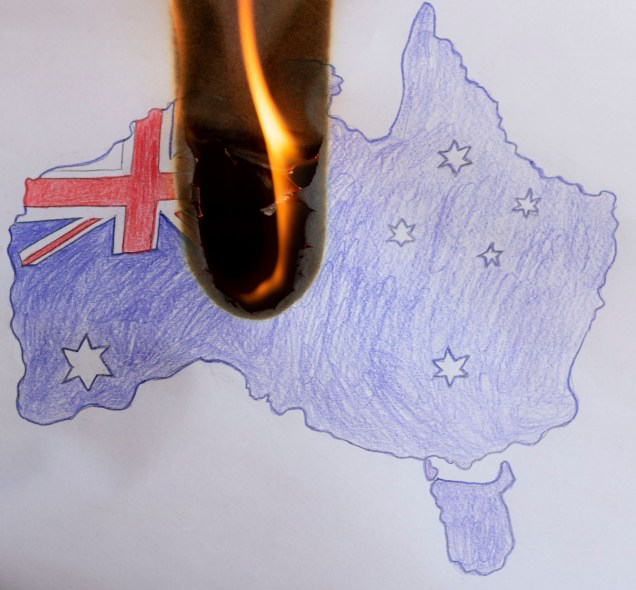
Australia has been a constant inferno since bushfire season started in September, with—according to BBC News—more than 24.7 million acres blackened by the devastating fires across the country. The entire nation is being affected, raising questions as to whether climate change is a contributing factor to the worsening flames.
2019 was an unusually dry and hot year for Australia, driven in part by the Indian Ocean Dipole (IOD), which is defined by differences in sea surface temperatures across the ocean. The IOD has contributed to reducing rainfall in regions of Australia, causing droughts which leaves the country vulnerable to bushfires.
Although it is currently winter season in Colorado, climate change is also a continuing conversation about the wildfires that occur during the summer months in Colorado. Colorado natives from the University of Denver especially, are quite familiar with the effect wildfires can have on an area.
Erin Emery, a biology major at DU, considers the rising temperatures in Australia to be an effect of climate change and therefore a contributing factor to the ongoing bushfires.
“The rising temperatures have a really big effect on rainfall, which makes the plants and environments super dry, which then increases the fire probability,” Emery said.
With climate change as a potential factor to the devastation the country is facing, the possibility arises that it could also worsen wildfire seasons in other parts of the world, particularly Colorado.
By the year 2039, researchers from the University of Arizona, the Universidad Nacional del Comahue in Argentina, and the University of California, Merced have estimated that the amount of snowpack in the Western U.S. will decrease to 50 fewer days and there will be a four-degree Fahrenheit increase in average temperature. These trends will in turn create longer fire seasons, causing more land to burn.
Although those numbers don’t derive from Colorado statistics specifically, students at DU still find cause for concern for the future of Colorado’s wildfire seasons.
“I am worried because even last year was really devastating,” said Emery.
Although it’s difficult to tell if wildfires in Colorado will worsen due to climate change, claims have been made that the present situation in Australia is bad due to abnormal rising temperatures, decreasing precipitation levels, and emissions of heat-trapping gases–all drivers of climate change.
It’s a domino effect of events that continue to ignite new fires and feed current ones. With December being one of the top two hottest months on record for the nation, it is almost inevitable that fires will stay ablaze.
The continually hot days cause plants to dry out, where they become kindling that is likely to catch fire. When the fires grow, there is more chance for lightning-induced fires to occur, creating an even bigger issue; not to mention the lack of rainfall, which encourages the cycle of growing fires to continue its destruction.
“I feel like the weather has been really messed up recently and that has a lot to do with Australia not getting a lot of rain right now,” said Ballweber.
Being from Colorado Springs, Ballweber is very familiar with wildfires causing devastation to a city. The Waldo Canyon Fire in 2012 and the Black Forest Fire in 2013 both caused serious destruction to the city of Colorado Springs. However, Ballweber remains hopeful that rain will stay persistent in Colorado, particularly her home of Colorado Springs, in the upcoming summer months.
On the other hand, Megan Wardeberg, a marketing major at DU is from Chicago where wildfires aren’t as prevalent as they are in Colorado. However, she is well aware of the bushfires in Australia and still worries that climate change is a main factor to their existence.
“Moving from Chicago to Colorado, the one thing I’ve noticed the most about the weather is how dry it is here. It makes more since why there are more fires in the summer in Colorado, but after hearing about the fires in Australia, I realize even more that climate change is probably a big reason for why fires like these happen,” said Wardeberg.
Although the current fires in Australia don’t have any direct correlation to wildfires that occur in Colorado, climate change has been at the forefront in conversations about both. Students in Colorado especially seem concerned that the fires occurring in Australia currently could replicate fires in Colorado’s future; and that is all thanks to the ever-growing effects of climate change.
Emery particularly recognizes this connection, “I think Australia is a foreshadowing of events to come in the summer months in Colorado.”

