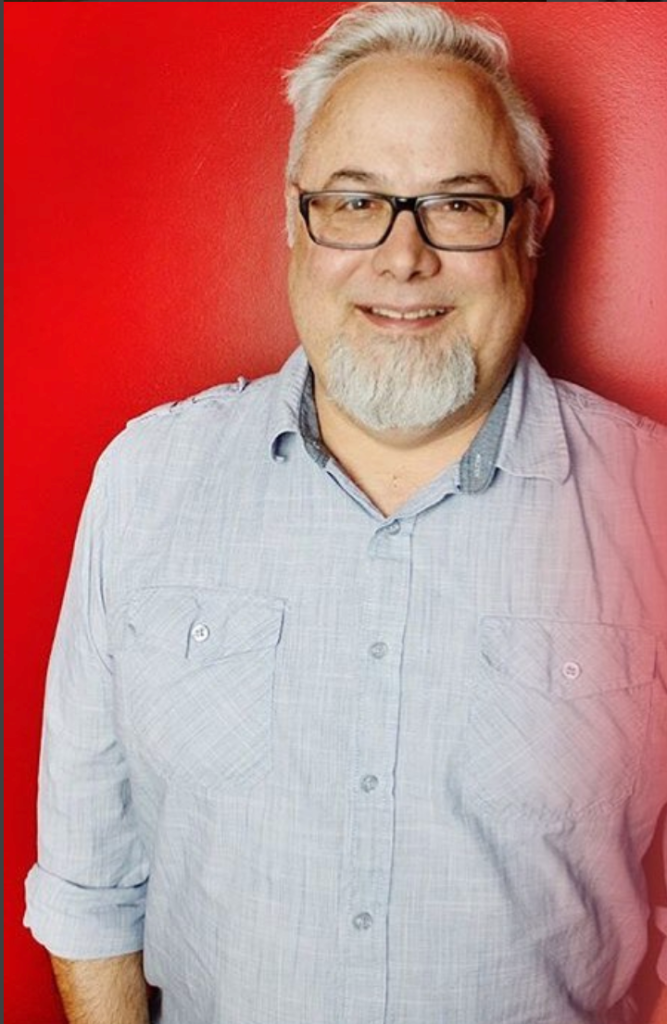
Maggie Levin Hollywood Director and Her New Amazon Hit Show

Maggie Levin lives a busy, hectic and unpredictable life as a film director and screenwriter. Levin, originally from New York moved to Los Angeles in 2009 in the pursuit of her film creation dreams. Currently, in Los Angeles,she is a charismatic, vibrant artist. 

The role of a screenwriter is to create the film’s storyline, characters, and dialogue. A film director, on the other hand, directs the construction of a movie while controlling and manipulating the artistic elements of the screenwriter’s vision. 

Edward Muybridge created and directed the first movie in 1872. The very brief movie was shot at a race track and displayed a horse galloping in front of them. The 1920s were revolutionary for the film industry. After WWI people began to invest more time and money into personal entertainment; causing movie demands to jump to an all-time high. The film industry saw a major shift in the 1980s; movies were becoming less about the screenwriter/directors’ creativity and more about what films were the most marketable. The new millennium birthed technological advances that altered the film industry in positive and negative ways. Computers, phones, ipads all create a direct connection to the content put out by Hollywood. Since anyone can write a script there is more pressure than ever to create new and exciting movies that will make it through production.

Diversity is limited in the film industry on and off-screen. Men run Hollywood. The lack of representation of women in filmmaking is detrimental to not only what is being produced but who it’s being produced by.Over and over again we see men writing, directing and producing movies about women without women even involved in the process. A study conducted by Martha M. Lauzen, Ph.D. The Celluloid Ceiling: Behind- the Scenes Employment of Women on the Top 100,250, and 500 Films of 2019 states that women compromised 12% of directors on the top grossing films in 2019, which increased 4% from 2018 and 8% in 2017 (1).

Levin is an inspiring role model for women who wish to work in the filmmaking industry. Her successes show that although it’s difficult to be a woman in film it’s possible with hard work and making your voice heard. In an interview Levin detailed her 10 year journey in the film industry and what it took her to get there. 

I find that the skills I’ve pulled from the most are the inter-personal ones, 

Levin said “You have to be good at communicating your ideas to people and communication in general. Additionally, you have to be able to listen to the input from all of the department heads and your actors and everyone in production is critical ”

The Hollywood film industry is evolving every day. Projects are constantly being produced at an increasingly rapid rate due to the accessibility to film and streaming services. It’s a cut-throat, competitive dog eat dog industry that is unbelievably unpredictable. Additionally, getting jobs as a director and or screenwriter all depend on if other people are interested in your work or need your help on a project. As a director  and screenwriter you are constantly meeting with people and being put in a lot of different rooms.

When Levine is not working on a specific job a typical day consists of three hours of writing and roughly 3-4 hours of meetings. When working on  a film her days vary depending on what stage of the process she’s in. If she’s shooting it’s around the clock whereas now she is trying to sell scripts and writing for hours a day. 

Directing and screenwriting are essentially freelance jobs therefore employment is on a need by need basis. This unpredictability leads to a chronic career of instability unless you become extremely successful. Projects can be in production one day and not the next.

“The instability and the constant practice of nonattachment are definitely the hardest parts about being a director and screenwriter. You can’t get too attached to a project;  it can really hurt in the end if it doesn’t get produced.” Levine accounted as one of the biggest downsides to her job.

Due to screenwriting and directing being freelance and inconsistent jobs the pay varies between when and if someone is hired. Lower budget film scripts can go for anywhere from 6,000-60,000 whereas mainstream Hollywood film scripts can be sold for millions of dollars. There is no formal education needed to be a screenwriter or a director but undergraduate and film school are often routes prospective creators take.

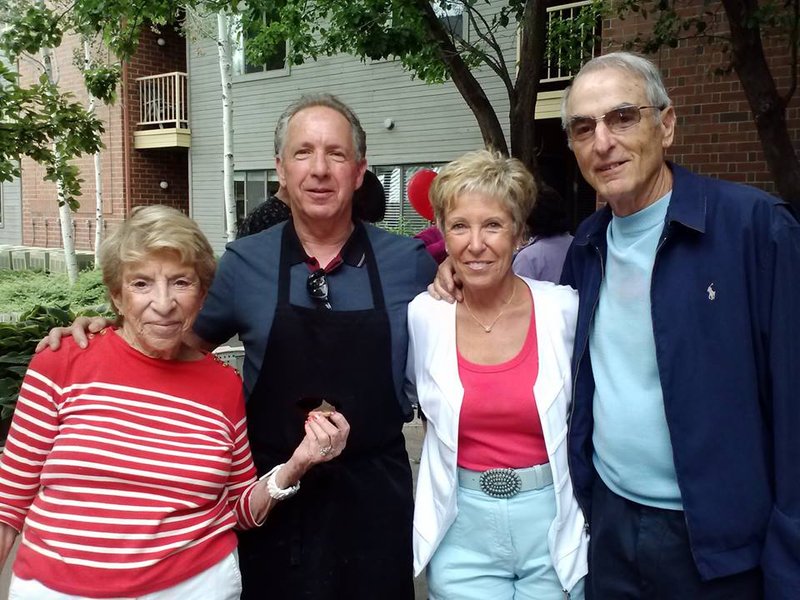
Using sales as a tool for the greater good: Carolyn Bishop

Carolyn Bishop on her first international mission in Pakistan [Photo by Hotes].

Carolyn Bishop wakes up every morning greeted by the Seattle dew and breathtaking view of Lake Washington. She’s in the office by 6 a.m. that sits on the water front of the infamous lake and she sips her daily mocha while checking on the space needle. Not a bad place to endure ten hour days.

But Bishop didn’t always have it like this. For the first 14 years of her career she was the first one in the office and the last one to leave. She even worked full days at home on Saturdays. 

“I didn’t even see a movie in theaters for over ten years because I was so focused on my work.” 

Michigan native leaves Detroit in search of a more “active real estate market”

team-ownership-group.width-800
Steve Elken (positioned middle left) poses with fellow owners of a senior living community in Arvada, CO. [Photo by http://www.springwoodretirement.com/our-retirement-campus%5D
DENVER- What was once known for its close proximity to so many ski mountains and for its pioneering recreational cannabis legalization, Denver is now being viewed as one of the largest hubs for real estate opportunities in the United States.

In 1985, founder and owner of Elkco and Michigan native, Steve Elken saw Denver’s real estate potential well in advance and capitalized.

Continue reading

After 10 years modeling in Europe, Patty Sylvia found a love for medical social work

Patty putting on lipstick 1987. [Courtesy of Pamela Hanson Photography]
Current photo of Patty. [Courtesy of Patty Sylvia’s Facebook]

My FaceTime call connects and Patty’s face greets me with a warm smile. It’s late evening and she is in the middle of filling out documentation for a patient visit she had that day. Patty Sylvia is a medical social worker; she works for Hope Hospice in Bristol, RI, but this hasn’t always been her career.

At 21 years old, Sylvia left for London on her first international flight hoping the modeling agent she was about to meet would like her.

Mary Ellen Keating, making her mark

Mary Ellen Keating in the office. [Photo by: Anna DiFrancesco]

Curiosity, tenacity, and an ability to read and write are the key ingredients to finding success in the news reporting industry, says Mary Ellen Keating. Keating was a news reporter for 10 years after college, gaining experience as a beat reporter and eventually hosting her own talk show and news reporting program. 

“You cannot be a great writer without being a good reader” says Keating. 

After graduating from Marywood University in 1979 with a degree in communications with a concentration in television news and public relations, Keating knew that she wanted to be on TV. 

Leah Haile creates digital magic at Lamar Advertising

It was a sunny, bright day in the state of Louisiana and Leah Haile was leaving her job at Lamar Advertising in Baton Rouge early due to LSU competing in the National Championship football game in New Orleans. Around the office, everyone could feel the excitement of the game they had been anticipating all season long looming that night. Before departing, Haile was asked to be on call for the game, which meant she had a small window of time after the game to put up a “creative” on all billboards in New Orleans if LSU won. For Haile, this was the exact moment she realized that the digital advertising field never stops, even beyond her daily in-office demands. 

The exploration of a city can be done through food; Mark Antonation Food & Drink Editor for Westword lives and breathes this mantra.

Food and Drink Editor for Westworld, Mark Antonation [Photo by Westworld]

A night out at the newest restaurant in town is a treat for most people. It means forgoing the grueling work of scrubbing sauce stained dishes, instead plates are whisked away once every bite has been taken. Moment’s like these reflect birthdays, celebrations and liberation from the typical day. However for Matt Antonation being surrounded by the excitement of a restaurant environment has him celebrating in a unique way as it can solidify the topic of his next article.

Denver Post’s, RJ Sangosti, gets candid about the life of a photojournalist

IMG_4223
RJ Sangosti in the Starbucks close to his home where he gets most of his work done. [Photo by: Linneya Gardner]
A young boy sits in a classroom, trying to read what’s in front of him, but struggles. He thinks to himself how he hates school because he can’t seem to read like some of the other kids. But when he exits the classroom and looks through a camera, he escapes into a world where he can be himself and finally see clearly. Photography becomes his outlet, part of his identity.

For RJ Sangosti, he was that young boy. From a young age he has been highly dyslexic, where reading and writing has just always been a struggle. But even through experiencing that ‘setback,’ Sangosti soon discovered that visual expression was what he was good at. 

“My dad gave me a camera when I was five or six years old. I remember my mom saved up to get my dad this camera, but he then gave it to me because he could see that I was traumatized, and it just became part of my identity,” reminisces Sangosti.

After realizing that photography was something he was good at and made him feel good about himself, Sangosti chose to go through the art program at Colorado State University. It was there that he joined the Collegian, a student run newspaper on campus, and started gaining the experience that would soon lead him to where he is today, working as a photojournalist for the Denver Post.

Continue reading

Anything but ordinary: what it’s like to work for DU athletics

Seth Goodman. [Photo courtesy of the University of Denver]

For any lover of sports, there are many niches within the careers in sports fields that allow any prospective worker to enter depending on their own interests and skills. In the sports communications realm, many of those niches involve things such as working with sports teams, athletes, leagues, athletic venues, and corporate sponsors. 

Seth Goodman currently works as an Athletic Communications Coordinator for the DU athletic department, primarily with the women’s basketball team and the ski team as the main communications contact. 

“If you don’t love what you’re doing, you’re f****d”

When thinking about a career in business, most of us have an image in our heads of an individual who got a college degree, maybe even an MBA, works five days a week and ten hours a day, they’ll have that job the majority of their life, and they will live a comfortable life regardless of their enjoyment of their profession. 

Arnold Feld, an 80 year old entrepreneur, didn’t go to college, didn’t work a single job for more than a decade, and never gave up. Most impressively, Feld refused to allow his creativity and passions to be squandered throughout both his life and his career, molding him into who he is today. 

Continue reading